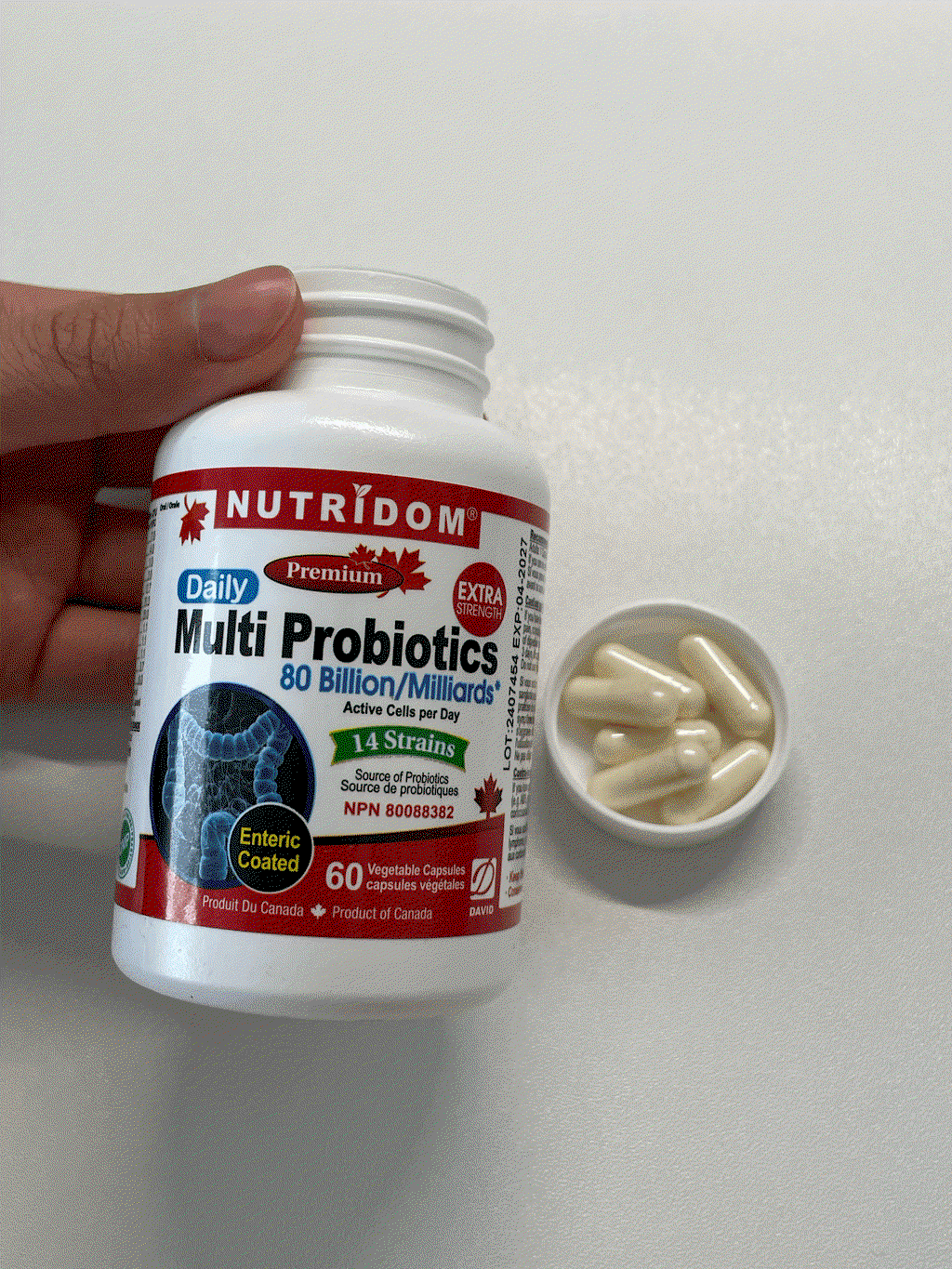
Q: What are the Health Canada approved uses for this product?
A: This product is approved by Health Canada (NPN 80088382) for the following uses: helps support a healthy gut flora; helps reduce the frequency of colds; helps relieve gastrointestinal symptoms associated with antibiotic use; and promotes a favourable gut flora. This product is not intended to diagnose, treat, cure, or prevent any disease.
Q: What does "80 Billion CFU guaranteed at expiry" mean and why does it matter?
A: CFU stands for Colony Forming Unit the standard measure of viable, living probiotic bacteria capable of reproducing. Many probiotic supplements state their CFU count at the time of manufacture, which is the moment the product is made. Probiotic bacteria are living organisms that die over time, even in encapsulated form. A product that contains 80 Billion CFU at manufacture may contain significantly fewer viable bacteria by the time it reaches the consumer and is used. This formula guarantees a minimum of 80 Billion CFU per serving at the expiry date, meaning the product is formulated and tested to ensure at least 80 Billion viable probiotic bacteria are present per serving throughout the entire shelf life. To achieve this guarantee, the formula is manufactured with a minimum of 132 Billion CFU per serving at the time of production a 65% overage above the guaranteed amount to account for the natural die-off of probiotic bacteria during storage. Whether you take the first capsule from a freshly manufactured bottle or the last capsule approaching its expiry date, you are guaranteed a minimum of 80 Billion CFU per serving.
Q: What is a CFU and why is it the relevant measure for probiotics?
A: CFU stands for Colony Forming Unit. It is the standard measure of viable, living probiotic bacteria capable of reproducing and forming a colony. A CFU count represents the number of live bacteria in a serving, not the total number of bacterial cells, which includes both live and dead cells. Only live bacteria contribute to probiotic activity, which is why CFU not total bacterial cell count is the relevant measure when evaluating probiotic supplements. When comparing probiotic products, always check whether the CFU is guaranteed at manufacture or at expiry, as this significantly affects the actual viable bacteria you receive.
Q: Why does this formula contain strains from both Lactobacillus and Bifidobacterium?
A: Lactobacillus and Bifidobacterium are the two primary probiotic genera relevant to human gut health, and they occupy different niches in the gastrointestinal tract. Lactobacillus species are found predominantly in the small intestine, while Bifidobacterium species are found predominantly in the large intestine (colon). A formula containing strains from both genera provides broader coverage across the full length of the gastrointestinal tract compared to a formula containing only one genus. This formula includes 8 Lactobacillus strains and 4 Bifidobacterium strains (plus 2 additional strains), providing comprehensive multi-site gut flora support.
Q: What are the key probiotic strains in this formula and what makes them significant?
A: The formula contains 14 strains, with the highest CFU contributions from: Lactobacillus plantarum (HA-119, R1012) at 20.3 Billion CFU one of the most versatile and resilient Lactobacillus species, naturally found in fermented foods and the human gut; Lactobacillus rhamnosus (HA-111) at 20.0 Billion CFU one of the most extensively researched probiotic species globally, particularly well-studied for gastrointestinal support and use during and after antibiotic therapy; and Lactobacillus acidophilus (HA-122) at 12.7 Billion CFU one of the most recognized probiotic species, naturally resident in the human small intestine. The Bifidobacterium strains include B. bifidum (HA-132) at 7.0 Billion CFU, B. longum subsp. longum (HA-135) at 4.0 Billion CFU, B. longum subsp. infantis (HA-116) at 2.0 Billion CFU, and B. breve (HA-129) at 1.0 Billion CFU, covering the primary Bifidobacterium species found in the adult and infant human gut.
Q: What are the HA- strain codes and why do they matter?
A: Each probiotic strain in this formula is identified by a proprietary strain designation (HA- code) in addition to its species name, for example Lactobacillus rhamnosus (HA-111). Strain-level identification is important because probiotic properties are strain-specific different strains of the same species can have significantly different characteristics, stability, and colonization properties. The HA- designations identify specific, characterized strains with defined properties, providing traceability and consistency from batch to batch. When a probiotic label lists only a species name without a strain designation, there is no way to verify which specific strain is being used or to compare it to research conducted on a specific strain.
Q: What is FOS and why is it included in this formula?
A: FOS (fructooligosaccharide) is a prebiotic — a non-digestible carbohydrate that selectively feeds beneficial bacteria in the gut. FOS is composed of short chains of fructose units linked to a glucose molecule and is found naturally in foods including chicory root, Jerusalem artichoke, garlic, onion, leek, asparagus, and banana. FOS is not digested by human digestive enzymes and passes intact to the large intestine, where it is selectively fermented by beneficial bacteria including Lactobacillus and Bifidobacterium species — the same genera present in this formula. By including FOS alongside the probiotic strains, this formula provides the probiotic bacteria with a preferred substrate to support their survival, colonization, and activity in the gut. A product that combines both probiotics and a prebiotic is called a synbiotic, making this a synbiotic formula.
Q: What is the difference between a probiotic, a prebiotic, and a synbiotic?
A: A probiotic is a live microorganism that, when administered in adequate amounts, confers a health benefit on the host. Probiotic supplements contain live beneficial bacteria such as Lactobacillus and Bifidobacterium species. A prebiotic is a substrate that is selectively utilized by host microorganisms and confers a health benefit. Prebiotics such as FOS are non-digestible carbohydrates that selectively feed beneficial bacteria in the gut without being digested by the human host. A synbiotic is a product that combines both probiotics and prebiotics in a single formulation, where the prebiotic is selected to support the specific probiotic strains present. This formula is a synbiotic: it contains 14 probiotic strains alongside FOS, which selectively supports the Lactobacillus and Bifidobacterium strains in the formula.
Q: How does gut flora support relate to immune health?
A: The gut is home to approximately 70 to 80% of the body's immune cells, and the gut microbiome plays a central role in the development and regulation of the immune system. Beneficial bacteria in the gut interact with immune cells in the gut-associated lymphoid tissue (GALT), supporting the normal development and function of both innate and adaptive immune responses. Maintaining a healthy and diverse gut flora is associated with normal immune function. Health Canada has approved this product (NPN 80088382) for helping reduce the frequency of colds, reflecting the established relationship between gut flora and immune function.
Q: Why is this probiotic particularly relevant during and after antibiotic use?
A: Antibiotics are designed to kill or inhibit bacteria, but they do not selectively target only harmful bacteria. Broad-spectrum antibiotics can significantly disrupt the gut microbiome by reducing the populations of beneficial bacteria alongside the targeted pathogens. This disruption of gut flora is the primary cause of antibiotic-associated gastrointestinal symptoms including diarrhea, bloating, and abdominal discomfort. Probiotic supplementation during and after antibiotic use helps replenish beneficial bacteria and support the restoration of a healthy gut flora. Lactobacillus rhamnosus (HA-111), one of the highest-CFU strains in this formula at 20.0 Billion CFU, is among the most studied probiotic strains for use during antibiotic therapy. Health Canada has approved this product (NPN 80088382) for helping relieve gastrointestinal symptoms associated with antibiotic use.
Q: Should probiotics be taken with or without food?
A: Probiotics can generally be taken with or without food. Some research suggests that taking probiotics with a meal or shortly before a meal may improve the survival of probiotic bacteria through the acidic environment of the stomach, as food can help buffer stomach acid. However, the encapsulation technology used in this formula is designed to support stability and potency. Consult your healthcare provider for personalized guidance on timing and dosage appropriate for your individual needs and health situation.
Q: Is this product suitable for vegans and vegetarians?
A: Yes, this probiotic supplement is 100% vegan and suitable for both vegans and vegetarians. The probiotic strains are bacteria, not animal-derived. The capsule shell is made from hypromellose (vegetable cellulose), not gelatin. The FOS prebiotic is derived from plant sources. All non-medicinal ingredients (fructooligosaccharide, silica, hypromellose) are plant-derived or mineral-based. The product is also non-GMO and free from gluten, dairy, and soy.
Q: Are there any safety considerations I should know about?
A: Consult a healthcare professional before use if you are pregnant or breastfeeding, have a compromised immune system, or have a central venous catheter. Individuals with severely compromised immune systems such as those undergoing chemotherapy, organ transplant recipients, or individuals with HIV/AIDS should consult a healthcare provider before using probiotic supplements, as there are rare case reports of bacteremia (bacteria entering the bloodstream) in severely immunocompromised individuals. Individuals with a central venous catheter should also consult a healthcare provider before use. May cause mild gastrointestinal discomfort including bloating and gas during the first few days of use as the gut flora adjusts; this typically resolves with continued use. This product is not intended to diagnose, treat, cure, or prevent any disease.