


Royal Jelly 1,000mg per Dose (Apis mellifera, Secretion). Antioxidant for the Maintenance of Good Health.
Each dose contains Royal Jelly 1,000mg (Apis mellifera, Secretion). Antioxidant for the maintenance of good health. Health Canada approved (NPN 80047674). Adults: 2 softgels, 1 to 3 times per day. Non-GMO, gluten free, soy free, dairy free. Made in Canada. 60 softgels.
Key Benefits
• Antioxidant for the maintenance of good health (NPN 80047674)
• Royal Jelly 1,000mg (Apis mellifera, Secretion) per dose
• Health Canada approved (NPN 80047674)
• Non-GMO, gluten free, soy free, dairy free
• 60 softgels
• Made in Canada
Note: Contains gelatin (softgel shell), beeswax, and royal jelly. Not suitable for vegans or vegetarians.
What This Product Does
This formula is an antioxidant for the maintenance of good health. This is the Health Canada approved use (NPN 80047674). This product is not intended to diagnose, treat, cure, or prevent any disease.
What Is Royal Jelly?
Royal jelly is a secretion produced by the hypopharyngeal and mandibular glands of worker honeybees (Apis mellifera). It is the exclusive food of the queen bee throughout her life and is fed to all bee larvae for the first three days after hatching. The queen bee is genetically identical to worker bees but develops differently because she is fed royal jelly exclusively throughout her development and adult life.
Royal jelly is a creamy white substance with a slightly acidic taste. It is composed of water (approximately 60 to 70%), proteins (approximately 12 to 15%), sugars (approximately 10 to 16%), fats (approximately 3 to 6%), and trace amounts of vitamins and minerals. Its composition is complex and not fully characterized.
Royal jelly is classified as a bee product. People with allergies to bee products (including honey and royal jelly), or with a history of allergies, asthma, atopy, or dermatitis, must not use this product. See the full safety information below.
Active Compounds in Royal Jelly
10-HDA (10-Hydroxy-2-decenoic acid): A medium-chain fatty acid found almost exclusively in royal jelly. It is not found in significant amounts in honey, propolis, or other bee products. Because of its uniqueness to royal jelly, 10-HDA is used as a quality and authenticity marker: the 10-HDA content of a royal jelly product is used to verify that the product contains genuine royal jelly and to assess its potency. Higher 10-HDA content generally indicates higher quality royal jelly. 10-HDA is present in this formula as a natural constituent of the Royal Jelly 1,000mg dose.
Royalactin: A protein unique to royal jelly, first identified in 2011. Royalactin is the protein responsible for triggering queen bee development in bee larvae. When bee larvae are fed royalactin, it activates a growth signaling pathway that causes them to develop into queen bees rather than worker bees. Royalactin belongs to the Major Royal Jelly Protein (MRJP) family, a group of proteins that make up the majority of the protein content of royal jelly. There are nine known MRJPs (MRJP1 through MRJP9), with MRJP1 (also called royalactin or apalbumin 1) being the most abundant.
Amino acids: Royal jelly contains all essential amino acids (the amino acids the human body cannot make on its own and must obtain from food or supplements). The most abundant free amino acids in royal jelly include proline (which makes up a large proportion of the free amino acid content), lysine, glutamic acid, and aspartic acid. Amino acids are the building blocks of proteins and are involved in virtually every process in the body.
Peptides: In addition to whole proteins like the MRJPs, royal jelly contains smaller protein fragments called peptides. These include jelleines (short antimicrobial peptides unique to royal jelly) and royalisin (also called defensin-1, an antimicrobial peptide). Peptides are chains of amino acids shorter than full proteins. The peptide content of royal jelly is an active area of research.
Fatty acids: Royal jelly contains a distinctive profile of fatty acids, most of which are medium-chain hydroxy fatty acids not commonly found in other foods. The most notable is 10-HDA (described above). Other fatty acids in royal jelly include sebacic acid (decanedioic acid), 2-decenedioic acid, and various other hydroxy and dicarboxylic fatty acids. These unusual fatty acids are largely responsible for the distinctive chemical profile of royal jelly and contribute to its identity as a unique bee product.
Understanding the Dose
The recommended dose for this formula is 2 softgels, 1 to 3 times per day. The dose frequency affects how long one bottle lasts.
At 2 softgels once per day: 60 softgels = 30 day supply (1 month).
At 2 softgels twice per day: 60 softgels = 15 day supply.
At 2 softgels three times per day: 60 softgels = 10 day supply.
Consult a health care practitioner to determine the appropriate dose frequency for your needs.
Understanding the Ingredient Content
Royal Jelly (Apis mellifera, Secretion): 1,000mg per dose (2 softgels)
Suggested Use: Adults: 2 softgels, 1 to 3 times per day
Softgels per bottle: 60
Non Medicinal Ingredients: Purified Water, Beeswax, Gelatin, Glycerin
Who May Consider This Product
• Adults seeking an antioxidant supplement for the maintenance of good health
• Those interested in royal jelly as a natural bee product supplement
• Those who want a Health Canada approved royal jelly formula made in Canada
Do not use if: you have a history of allergies, asthma, atopy or dermatitis; you are allergic to bee products such as honey or royal jelly; you are taking warfarin; you are pregnant or breastfeeding. See full safety information below.
Not suitable for vegans or vegetarians. Contains gelatin (softgel shell), beeswax, and royal jelly (a bee secretion).
Quality and Purity
• Health Canada approved (NPN 80047674)
• Royal Jelly 1,000mg (Apis mellifera, Secretion) per dose
• Non-GMO, gluten free, soy free, dairy free
• Free from ethylene oxide
• 60 softgels
• Made in Canada
Storage
Store in a cool, dry place away from direct sunlight and moisture. Keep bottle tightly sealed after each use. Royal jelly is sensitive to heat and light.
Safety Information and Cautions
Do not use if you have a history of allergies, asthma, atopy or dermatitis.
Do not use if you are allergic to bee products such as honey or royal jelly.
Do not use if you are taking warfarin.
Do not use if you are pregnant or breastfeeding.
Consult a health care practitioner prior to use if you are taking any prescribed medicines.
Hypersensitivity (e.g., allergy) has been known to occur; in which case, discontinue use.
This product is not intended to diagnose, treat, cure, or prevent any disease.
Keep out of reach of children.
This product is approved by Health Canada (NPN 80047674).
About Royal Jelly 1,000mg | Antioxidant | Made in Canada
Royal jelly is a secretion produced by worker honeybees (Apis mellifera) and is the exclusive food of the queen bee. This formula provides Royal Jelly 1,000mg (Apis mellifera, Secretion) per dose (2 softgels). Health Canada approved as an antioxidant for the maintenance of good health (NPN 80047674). Royal jelly contains a complex profile of active compounds including 10-HDA (a fatty acid unique to royal jelly used as a quality marker), royalactin and the Major Royal Jelly Proteins (MRJPs), all essential amino acids, antimicrobial peptides including jelleines and royalisin, and a distinctive profile of medium-chain hydroxy fatty acids. Adults: 2 softgels, 1 to 3 times per day. Non-GMO, gluten free, soy free, dairy free, free from ethylene oxide. Contains gelatin, beeswax, and royal jelly. Not suitable for vegans or vegetarians. Do not use if you have a history of allergies, asthma, atopy or dermatitis, are allergic to bee products, are taking warfarin, or are pregnant or breastfeeding. Made in Canada. 60 softgels.
Royal Jelly 1,000mg per Dose (Apis mellifera, Secretion). Antioxidant for the Maintenance of Good Health.
Each dose contains Royal Jelly 1,000mg (Apis mellifera, Secretion). Antioxidant for the maintenance of good health. Health Canada approved (NPN 80047674). Adults: 2 softgels, 1 to 3 times per day. Non-GMO, gluten free, soy free, dairy free. Made in Canada. 60 softgels.
Key Benefits
• Antioxidant for the maintenance of good health (NPN 80047674)
• Royal Jelly 1,000mg (Apis mellifera, Secretion) per dose
• Health Canada approved (NPN 80047674)
• Non-GMO, gluten free, soy free, dairy free
• 60 softgels
• Made in Canada
Note: Contains gelatin (softgel shell), beeswax, and royal jelly. Not suitable for vegans or vegetarians.
What This Product Does
This formula is an antioxidant for the maintenance of good health. This is the Health Canada approved use (NPN 80047674). This product is not intended to diagnose, treat, cure, or prevent any disease.
What Is Royal Jelly?
Royal jelly is a secretion produced by the hypopharyngeal and mandibular glands of worker honeybees (Apis mellifera). It is the exclusive food of the queen bee throughout her life and is fed to all bee larvae for the first three days after hatching. The queen bee is genetically identical to worker bees but develops differently because she is fed royal jelly exclusively throughout her development and adult life.
Royal jelly is a creamy white substance with a slightly acidic taste. It is composed of water (approximately 60 to 70%), proteins (approximately 12 to 15%), sugars (approximately 10 to 16%), fats (approximately 3 to 6%), and trace amounts of vitamins and minerals. Its composition is complex and not fully characterized.
Royal jelly is classified as a bee product. People with allergies to bee products (including honey and royal jelly), or with a history of allergies, asthma, atopy, or dermatitis, must not use this product. See the full safety information below.
Active Compounds in Royal Jelly
10-HDA (10-Hydroxy-2-decenoic acid): A medium-chain fatty acid found almost exclusively in royal jelly. It is not found in significant amounts in honey, propolis, or other bee products. Because of its uniqueness to royal jelly, 10-HDA is used as a quality and authenticity marker: the 10-HDA content of a royal jelly product is used to verify that the product contains genuine royal jelly and to assess its potency. Higher 10-HDA content generally indicates higher quality royal jelly. 10-HDA is present in this formula as a natural constituent of the Royal Jelly 1,000mg dose.
Royalactin: A protein unique to royal jelly, first identified in 2011. Royalactin is the protein responsible for triggering queen bee development in bee larvae. When bee larvae are fed royalactin, it activates a growth signaling pathway that causes them to develop into queen bees rather than worker bees. Royalactin belongs to the Major Royal Jelly Protein (MRJP) family, a group of proteins that make up the majority of the protein content of royal jelly. There are nine known MRJPs (MRJP1 through MRJP9), with MRJP1 (also called royalactin or apalbumin 1) being the most abundant.
Amino acids: Royal jelly contains all essential amino acids (the amino acids the human body cannot make on its own and must obtain from food or supplements). The most abundant free amino acids in royal jelly include proline (which makes up a large proportion of the free amino acid content), lysine, glutamic acid, and aspartic acid. Amino acids are the building blocks of proteins and are involved in virtually every process in the body.
Peptides: In addition to whole proteins like the MRJPs, royal jelly contains smaller protein fragments called peptides. These include jelleines (short antimicrobial peptides unique to royal jelly) and royalisin (also called defensin-1, an antimicrobial peptide). Peptides are chains of amino acids shorter than full proteins. The peptide content of royal jelly is an active area of research.
Fatty acids: Royal jelly contains a distinctive profile of fatty acids, most of which are medium-chain hydroxy fatty acids not commonly found in other foods. The most notable is 10-HDA (described above). Other fatty acids in royal jelly include sebacic acid (decanedioic acid), 2-decenedioic acid, and various other hydroxy and dicarboxylic fatty acids. These unusual fatty acids are largely responsible for the distinctive chemical profile of royal jelly and contribute to its identity as a unique bee product.
Understanding the Dose
The recommended dose for this formula is 2 softgels, 1 to 3 times per day. The dose frequency affects how long one bottle lasts.
At 2 softgels once per day: 60 softgels = 30 day supply (1 month).
At 2 softgels twice per day: 60 softgels = 15 day supply.
At 2 softgels three times per day: 60 softgels = 10 day supply.
Consult a health care practitioner to determine the appropriate dose frequency for your needs.
Understanding the Ingredient Content
Royal Jelly (Apis mellifera, Secretion): 1,000mg per dose (2 softgels)
Suggested Use: Adults: 2 softgels, 1 to 3 times per day
Softgels per bottle: 60
Non Medicinal Ingredients: Purified Water, Beeswax, Gelatin, Glycerin
Who May Consider This Product
• Adults seeking an antioxidant supplement for the maintenance of good health
• Those interested in royal jelly as a natural bee product supplement
• Those who want a Health Canada approved royal jelly formula made in Canada
Do not use if: you have a history of allergies, asthma, atopy or dermatitis; you are allergic to bee products such as honey or royal jelly; you are taking warfarin; you are pregnant or breastfeeding. See full safety information below.
Not suitable for vegans or vegetarians. Contains gelatin (softgel shell), beeswax, and royal jelly (a bee secretion).
Quality and Purity
• Health Canada approved (NPN 80047674)
• Royal Jelly 1,000mg (Apis mellifera, Secretion) per dose
• Non-GMO, gluten free, soy free, dairy free
• Free from ethylene oxide
• 60 softgels
• Made in Canada
Storage
Store in a cool, dry place away from direct sunlight and moisture. Keep bottle tightly sealed after each use. Royal jelly is sensitive to heat and light.
Safety Information and Cautions
Do not use if you have a history of allergies, asthma, atopy or dermatitis.
Do not use if you are allergic to bee products such as honey or royal jelly.
Do not use if you are taking warfarin.
Do not use if you are pregnant or breastfeeding.
Consult a health care practitioner prior to use if you are taking any prescribed medicines.
Hypersensitivity (e.g., allergy) has been known to occur; in which case, discontinue use.
This product is not intended to diagnose, treat, cure, or prevent any disease.
Keep out of reach of children.
This product is approved by Health Canada (NPN 80047674).
About Royal Jelly 1,000mg | Antioxidant | Made in Canada
Royal jelly is a secretion produced by worker honeybees (Apis mellifera) and is the exclusive food of the queen bee. This formula provides Royal Jelly 1,000mg (Apis mellifera, Secretion) per dose (2 softgels). Health Canada approved as an antioxidant for the maintenance of good health (NPN 80047674). Royal jelly contains a complex profile of active compounds including 10-HDA (a fatty acid unique to royal jelly used as a quality marker), royalactin and the Major Royal Jelly Proteins (MRJPs), all essential amino acids, antimicrobial peptides including jelleines and royalisin, and a distinctive profile of medium-chain hydroxy fatty acids. Adults: 2 softgels, 1 to 3 times per day. Non-GMO, gluten free, soy free, dairy free, free from ethylene oxide. Contains gelatin, beeswax, and royal jelly. Not suitable for vegans or vegetarians. Do not use if you have a history of allergies, asthma, atopy or dermatitis, are allergic to bee products, are taking warfarin, or are pregnant or breastfeeding. Made in Canada. 60 softgels.

Canadian-Made
Lab-Tested

Health Canada Approved

20 Years of Research
I had been searching for a natural way to support my energy, immunity, and overall well-being, and Royal Jelly turned out to be a true discovery! After just a few weeks of taking Royal Jelly supplements, I noticed a real difference in how I felt: I had more energy, fatigue started to fade, and even my skin looked fresher.
What I love most is that it’s a completely natural product packed with vitamins and amino acids. Its benefits for the body are genuinely noticeable.
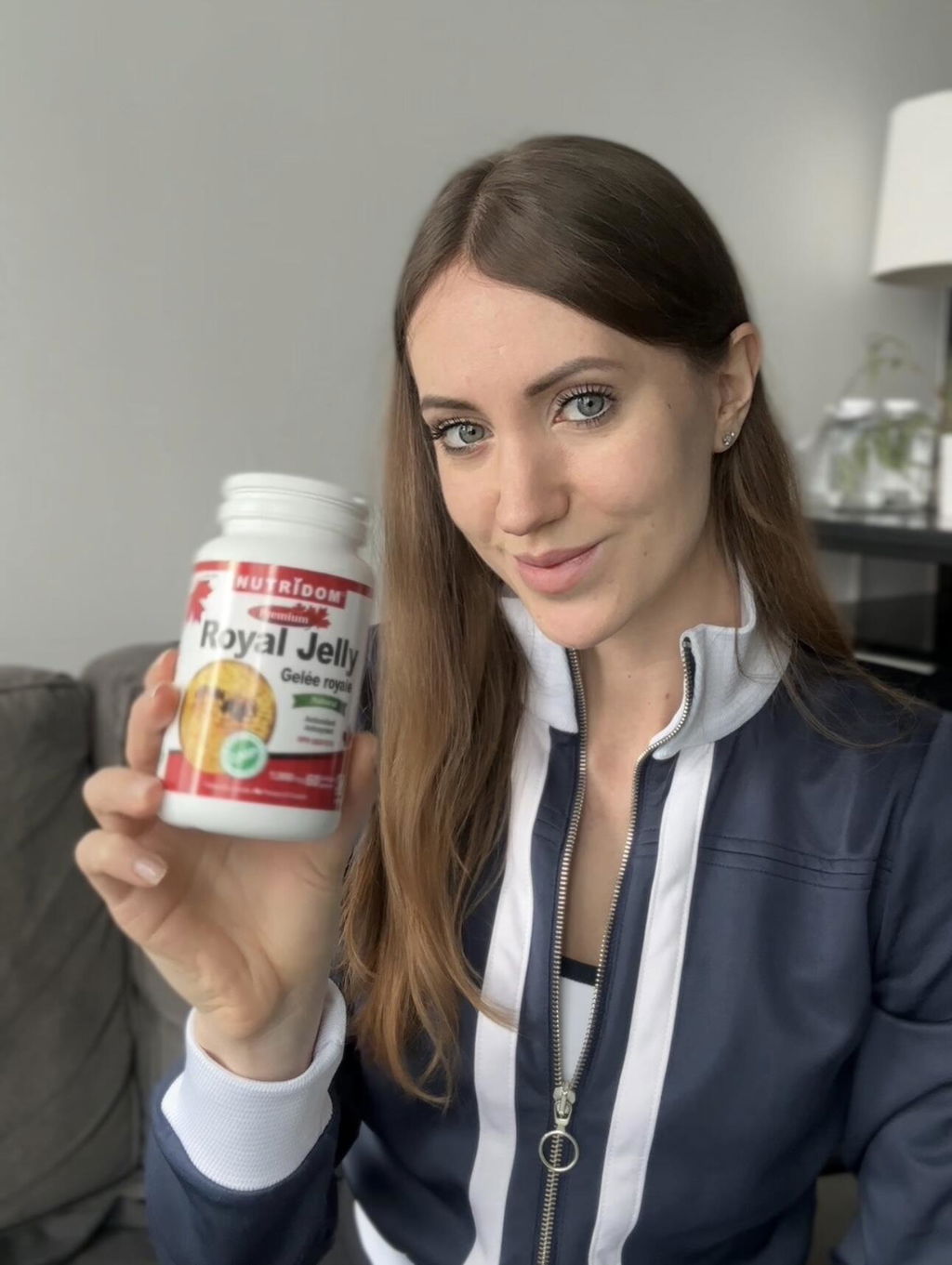
I really feel the changes in my body. Before, I would get tired more quickly, and I was more irritable and absent-minded. Even though my pace of life stayed the same, my friends and I noticed changes in me. They said I seemed to blossom and was filled with energy. Will I continue taking Royal Jelly?
Absolutely! I can no longer imagine my life without it.
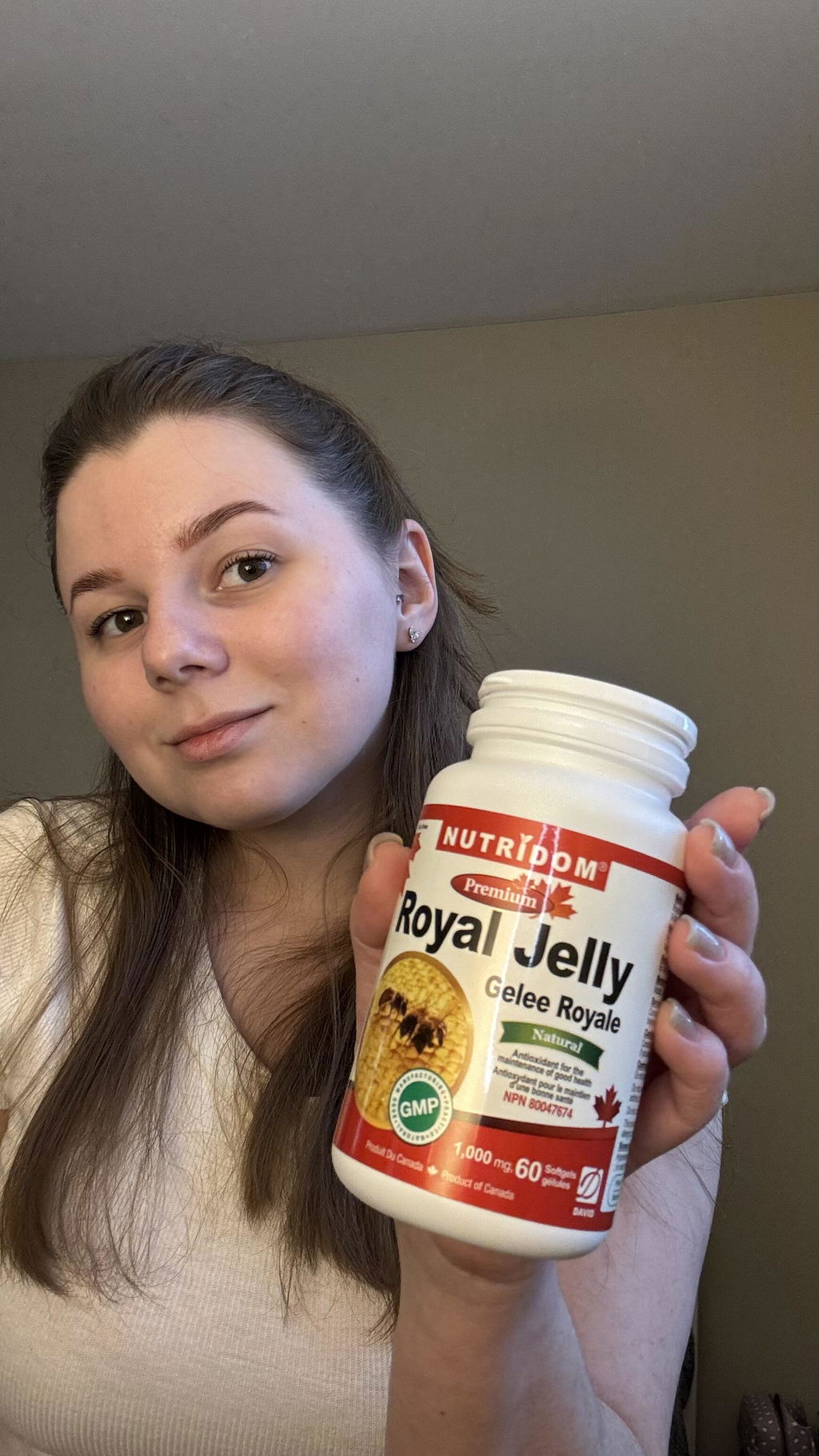
Quick delivery and high quality!
She think it works wonderful.