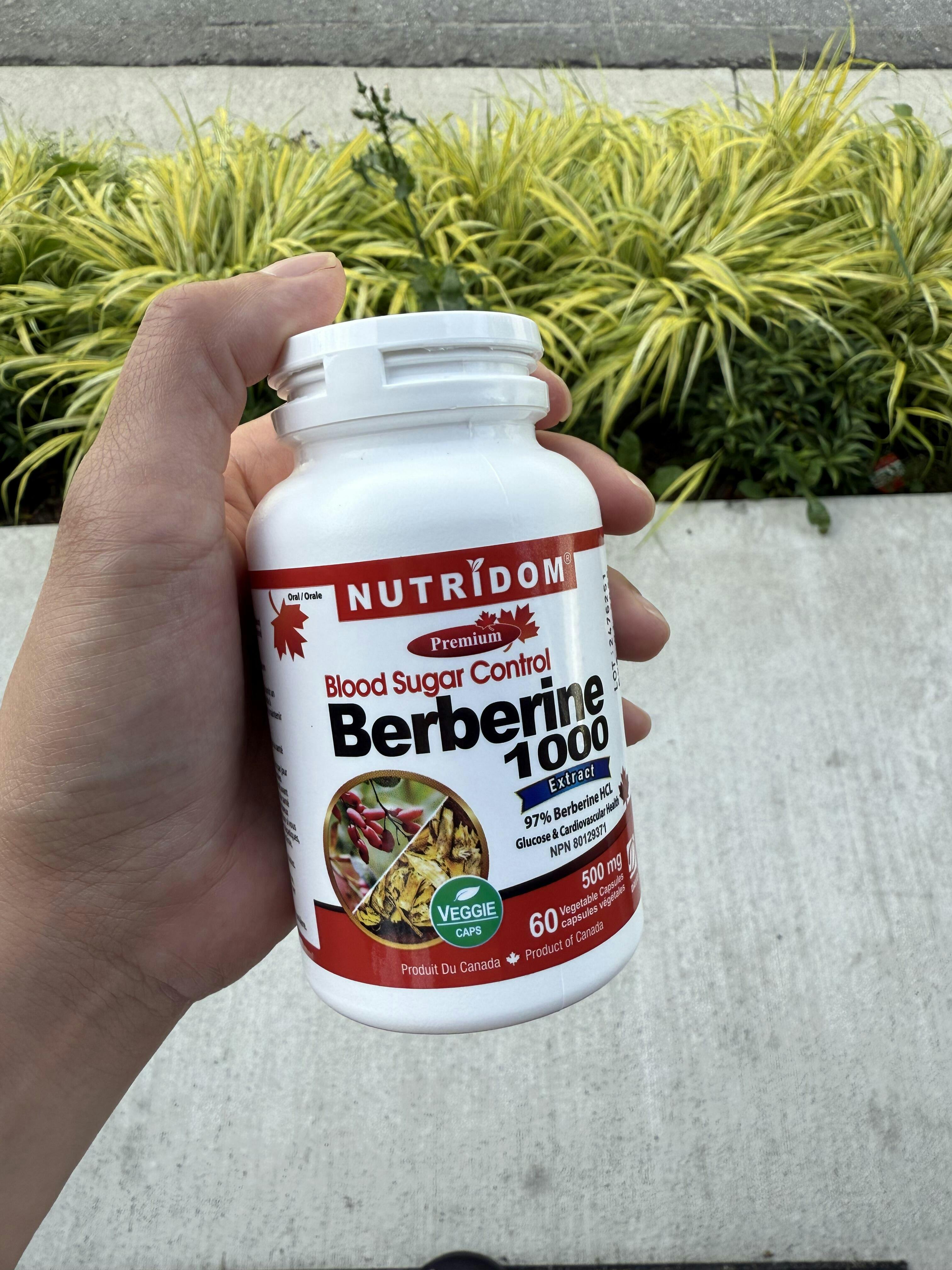
Pharmaceutical Grade Berberine HCL
Nutridom Berberine delivers 500mg of 97% pure Berberine HCL per capsule, extracted from barberry root using advanced purification methods. Each bottle contains 60 vegan capsules formulated to support healthy glucose metabolism, cardiovascular function, and cellular energy production.
Clinically Studied AMPK Activation
- Activates AMPK enzyme, the cellular metabolic regulator
- Supports healthy insulin sensitivity and glucose utilization
- Promotes mitochondrial biogenesis and cellular energy
- Influences lipid metabolism and cholesterol homeostasis
- Modulates gut microbiome composition
Research Backed Metabolic Support
- Extensively studied in clinical trials for metabolic health
- Supports healthy fasting glucose levels
- Aids post-prandial glucose management
- Promotes healthy HbA1c levels over time
- Supports cardiovascular wellness markers
Premium Quality Standards
- 97% pure berberine HCL (pharmaceutical grade)
- Manufactured in Canada under GMP certification
- Third party tested for purity, potency, and contaminants
- Vegan capsules, gluten free, soy free, dairy free
- No artificial additives, fillers, or preservatives
Evidence Based Dosing Protocol
- Clinical dose: 1500mg daily (three 500mg servings)
- Take with meals to enhance bioavailability
- Optimal absorption when paired with food intake
- Consistent daily use for 8-12 weeks recommended
- Supports sustained metabolic optimization
Scientifically Formulated For
- Adults seeking evidence based metabolic support
- Those focused on healthy glucose homeostasis
- Individuals supporting cardiovascular wellness
- People interested in AMPK pathway activation
- Health conscious consumers preferring research backed supplements
The Science of Berberine
Berberine is a bioactive alkaloid compound isolated from several plant species including Berberis vulgaris (barberry), Coptis chinensis (goldthread), and Hydrastis canadensis (goldenseal). Its molecular structure allows it to cross cellular membranes and interact with multiple molecular targets, making it one of the most extensively studied natural compounds in metabolic research.
AMPK Pathway Activation
The primary mechanism of berberine involves activation of AMP-activated protein kinase (AMPK), a master regulator of cellular energy homeostasis. AMPK activation triggers a cascade of metabolic effects:
- Enhanced glucose uptake in skeletal muscle cells
- Increased insulin receptor sensitivity
- Suppression of hepatic gluconeogenesis
- Activation of fatty acid oxidation pathways
- Stimulation of mitochondrial biogenesis
Glucose Metabolism Research
Clinical studies have demonstrated berberine's effects on glucose homeostasis through multiple mechanisms. Research published in peer reviewed journals shows berberine influences glucose metabolism at the cellular, tissue, and systemic levels. Studies comparing berberine to standard interventions have shown comparable effects on fasting glucose and HbA1c markers.
Lipid Metabolism and Cardiovascular Support
Beyond glucose metabolism, berberine has been studied for its effects on lipid profiles. Research indicates berberine may influence cholesterol metabolism through:
- Upregulation of hepatic LDL receptors
- Inhibition of PCSK9 protein expression
- Modulation of cholesterol biosynthesis enzymes
- Enhancement of bile acid excretion
- Support for healthy triglyceride levels
Gut Microbiome Modulation
Emerging research highlights berberine's antimicrobial properties and effects on gut microbiota composition. Berberine demonstrates selective antimicrobial activity, reducing pathogenic bacteria while supporting beneficial species. This microbiome modulation may contribute to its metabolic effects, as gut bacteria influence nutrient metabolism, inflammation, and metabolic signaling.
Bioavailability and Absorption
Berberine exhibits relatively low oral bioavailability due to poor intestinal absorption and extensive first pass metabolism. However, research suggests that despite low systemic bioavailability, berberine accumulates in tissues and exerts significant metabolic effects. Taking berberine with meals enhances absorption and allows for interaction with dietary nutrients.
Clinical Evidence and Meta Analyses
Systematic reviews and meta analyses of berberine clinical trials have examined its effects across multiple metabolic parameters:
- Significant reductions in fasting plasma glucose
- Improvements in post-prandial glucose excursions
- Reductions in HbA1c levels (long term glucose marker)
- Decreases in total cholesterol and LDL cholesterol
- Reductions in triglyceride concentrations
- Modest improvements in body composition markers
Molecular Mechanisms Beyond AMPK
While AMPK activation is berberine's primary mechanism, research has identified additional molecular targets:
- Inhibition of mitochondrial complex
- Activation of brown adipose tissue thermogenesis
- Modulation of incretin hormone secretion
- Influence on nuclear receptor signaling
- Effects on inflammatory pathway regulation
Pharmaceutical Grade Purity
Berberine quality varies significantly between supplements. Our 97% pure berberine HCL represents pharmaceutical grade purity, ensuring:
- Consistent potency across batches
- Minimal impurities or contaminants
- Optimal bioactive compound concentration
- Reliable dosing for research based protocols
- Third party verification of purity claims
Evidence Based Dosing
Clinical research typically employs 1500mg daily berberine, divided into three 500mg doses with meals. This dosing protocol:
- Matches doses used in published clinical trials
- Optimizes absorption when paired with food
- Maintains steady state plasma concentrations
- Minimizes gastrointestinal adaptation period
- Supports consistent AMPK activation throughout the day
Important Considerations
Consult healthcare provider before use if:
- Taking medications affecting glucose metabolism
- Using blood pressure or lipid lowering medications
- Pregnant, nursing, or planning pregnancy
- Have hypotension or cardiovascular conditions
- Taking medications metabolized by CYP450 enzymes
Optimal use guidelines:
- Take with meals containing macronutrients
- Maintain consistent daily supplementation
- Allow 8-12 weeks for metabolic adaptations
- Monitor relevant biomarkers with healthcare provider
- Combine with evidence based lifestyle interventions
*These statements have not been evaluated by Health Canada or the FDA. This product is not intended to diagnose, treat, cure, or prevent any disease.
Pharmaceutical Grade Berberine HCL
Nutridom Berberine delivers 500mg of 97% pure Berberine HCL per capsule, extracted from barberry root using advanced purification methods. Each bottle contains 60 vegan capsules formulated to support healthy glucose metabolism, cardiovascular function, and cellular energy production.
Clinically Studied AMPK Activation
- Activates AMPK enzyme, the cellular metabolic regulator
- Supports healthy insulin sensitivity and glucose utilization
- Promotes mitochondrial biogenesis and cellular energy
- Influences lipid metabolism and cholesterol homeostasis
- Modulates gut microbiome composition
Research Backed Metabolic Support
- Extensively studied in clinical trials for metabolic health
- Supports healthy fasting glucose levels
- Aids post-prandial glucose management
- Promotes healthy HbA1c levels over time
- Supports cardiovascular wellness markers
Premium Quality Standards
- 97% pure berberine HCL (pharmaceutical grade)
- Manufactured in Canada under GMP certification
- Third party tested for purity, potency, and contaminants
- Vegan capsules, gluten free, soy free, dairy free
- No artificial additives, fillers, or preservatives
Evidence Based Dosing Protocol
- Clinical dose: 1500mg daily (three 500mg servings)
- Take with meals to enhance bioavailability
- Optimal absorption when paired with food intake
- Consistent daily use for 8-12 weeks recommended
- Supports sustained metabolic optimization
Scientifically Formulated For
- Adults seeking evidence based metabolic support
- Those focused on healthy glucose homeostasis
- Individuals supporting cardiovascular wellness
- People interested in AMPK pathway activation
- Health conscious consumers preferring research backed supplements
The Science of Berberine
Berberine is a bioactive alkaloid compound isolated from several plant species including Berberis vulgaris (barberry), Coptis chinensis (goldthread), and Hydrastis canadensis (goldenseal). Its molecular structure allows it to cross cellular membranes and interact with multiple molecular targets, making it one of the most extensively studied natural compounds in metabolic research.
AMPK Pathway Activation
The primary mechanism of berberine involves activation of AMP-activated protein kinase (AMPK), a master regulator of cellular energy homeostasis. AMPK activation triggers a cascade of metabolic effects:
- Enhanced glucose uptake in skeletal muscle cells
- Increased insulin receptor sensitivity
- Suppression of hepatic gluconeogenesis
- Activation of fatty acid oxidation pathways
- Stimulation of mitochondrial biogenesis
Glucose Metabolism Research
Clinical studies have demonstrated berberine's effects on glucose homeostasis through multiple mechanisms. Research published in peer reviewed journals shows berberine influences glucose metabolism at the cellular, tissue, and systemic levels. Studies comparing berberine to standard interventions have shown comparable effects on fasting glucose and HbA1c markers.
Lipid Metabolism and Cardiovascular Support
Beyond glucose metabolism, berberine has been studied for its effects on lipid profiles. Research indicates berberine may influence cholesterol metabolism through:
- Upregulation of hepatic LDL receptors
- Inhibition of PCSK9 protein expression
- Modulation of cholesterol biosynthesis enzymes
- Enhancement of bile acid excretion
- Support for healthy triglyceride levels
Gut Microbiome Modulation
Emerging research highlights berberine's antimicrobial properties and effects on gut microbiota composition. Berberine demonstrates selective antimicrobial activity, reducing pathogenic bacteria while supporting beneficial species. This microbiome modulation may contribute to its metabolic effects, as gut bacteria influence nutrient metabolism, inflammation, and metabolic signaling.
Bioavailability and Absorption
Berberine exhibits relatively low oral bioavailability due to poor intestinal absorption and extensive first pass metabolism. However, research suggests that despite low systemic bioavailability, berberine accumulates in tissues and exerts significant metabolic effects. Taking berberine with meals enhances absorption and allows for interaction with dietary nutrients.
Clinical Evidence and Meta Analyses
Systematic reviews and meta analyses of berberine clinical trials have examined its effects across multiple metabolic parameters:
- Significant reductions in fasting plasma glucose
- Improvements in post-prandial glucose excursions
- Reductions in HbA1c levels (long term glucose marker)
- Decreases in total cholesterol and LDL cholesterol
- Reductions in triglyceride concentrations
- Modest improvements in body composition markers
Molecular Mechanisms Beyond AMPK
While AMPK activation is berberine's primary mechanism, research has identified additional molecular targets:
- Inhibition of mitochondrial complex
- Activation of brown adipose tissue thermogenesis
- Modulation of incretin hormone secretion
- Influence on nuclear receptor signaling
- Effects on inflammatory pathway regulation
Pharmaceutical Grade Purity
Berberine quality varies significantly between supplements. Our 97% pure berberine HCL represents pharmaceutical grade purity, ensuring:
- Consistent potency across batches
- Minimal impurities or contaminants
- Optimal bioactive compound concentration
- Reliable dosing for research based protocols
- Third party verification of purity claims
Evidence Based Dosing
Clinical research typically employs 1500mg daily berberine, divided into three 500mg doses with meals. This dosing protocol:
- Matches doses used in published clinical trials
- Optimizes absorption when paired with food
- Maintains steady state plasma concentrations
- Minimizes gastrointestinal adaptation period
- Supports consistent AMPK activation throughout the day
Important Considerations
Consult healthcare provider before use if:
- Taking medications affecting glucose metabolism
- Using blood pressure or lipid lowering medications
- Pregnant, nursing, or planning pregnancy
- Have hypotension or cardiovascular conditions
- Taking medications metabolized by CYP450 enzymes
Optimal use guidelines:
- Take with meals containing macronutrients
- Maintain consistent daily supplementation
- Allow 8-12 weeks for metabolic adaptations
- Monitor relevant biomarkers with healthcare provider
- Combine with evidence based lifestyle interventions
*These statements have not been evaluated by Health Canada or the FDA. This product is not intended to diagnose, treat, cure, or prevent any disease.

Canadian-Made

Lab-Tested

Health Canada Approved