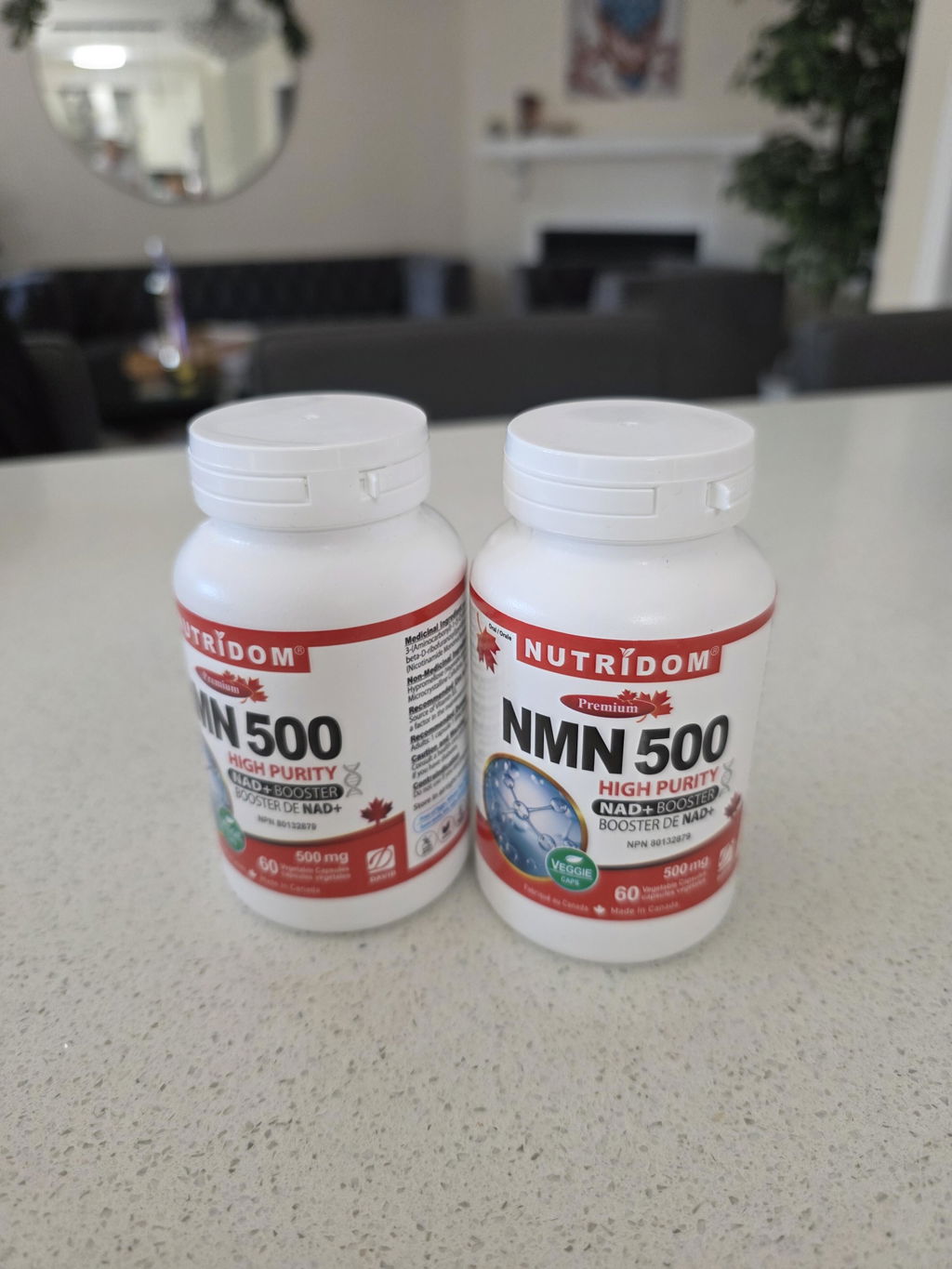
NMN 500mg | Nicotinamide Mononucleotide | Direct NAD+ Precursor | 60 Vegan Capsules
Each capsule contains 500mg of NMN (Nicotinamide Mononucleotide), a naturally occurring nucleotide and direct biosynthetic precursor to NAD+ (Nicotinamide Adenine Dinucleotide). NAD+ is a coenzyme found in every living cell and is essential for cellular energy production, mitochondrial function, and the activity of NAD+-dependent enzymes including sirtuins and PARPs. NMN is one of the most direct and efficient ways to support NAD+ biosynthesis, as it enters the NAD+ biosynthetic pathway at a late stage, requiring only a single enzymatic step (catalyzed by NMNAT) to be converted to NAD+. GMP certified. 100% vegan, non-GMO, gluten-free, and soy-free. Made in Canada in a quality-controlled facility. 60 vegan capsules.
Key Features
• 500mg NMN (Nicotinamide Mononucleotide) per capsule
• Direct NAD+ precursor: one enzymatic step from NAD+
• Naturally occurring nucleotide found in all living cells
• Supports NAD+ biosynthesis via the salvage pathway
• Supports mitochondrial function and cellular energy metabolism
• Supports the activity of NAD+-dependent enzymes (sirtuins, PARPs)
• GMP certified manufacturing
• 60 vegan capsules
• Made in Canada in a quality-controlled facility
• 100% vegan and non-GMO
• Gluten-free, dairy-free, soy-free
What Is NMN?
Nicotinamide Mononucleotide (NMN) is a naturally occurring nucleotide found in all living cells and in small amounts in certain foods including edamame, broccoli, avocado, tomatoes, and raw beef. It is a member of the vitamin B3 (niacin) family of compounds and a direct biosynthetic precursor to NAD+ (Nicotinamide Adenine Dinucleotide). NMN is produced naturally in the body through multiple biosynthetic pathways and is the immediate precursor to NAD+ in the most efficient NAD+ biosynthetic route.
Full Chemical Name: The IUPAC name for NMN is 3-(Aminocarbonyl)-1-(5-O-phosphonato-beta-D-ribofuranosyl)pyridinium. It consists of a nicotinamide (niacinamide) group attached to a ribose sugar with a phosphate group, making it a nucleotide structurally similar to the nucleotides that make up DNA and RNA.
Natural Occurrence: NMN is found naturally in the body as an intermediate in NAD+ biosynthesis and is present in small amounts in various foods. However, dietary NMN amounts are far lower than supplemental doses, and the body's own NMN biosynthesis capacity may decline with age.
NAD+: Why It Matters
NAD+ (Nicotinamide Adenine Dinucleotide) is one of the most important coenzymes in human biology. It is found in every living cell and participates in hundreds of metabolic reactions. Understanding NAD+ is essential for understanding why NMN supplementation is of scientific interest.
Cellular Energy Production: NAD+ is a central electron carrier in cellular energy metabolism. In the process of cellular respiration, NAD+ accepts electrons from metabolic reactions (becoming NADH) and transfers them to the electron transport chain in the mitochondria, where they are used to generate ATP (adenosine triphosphate), the primary energy currency of the cell. Without NAD+, cellular energy production cannot proceed normally.
Mitochondrial Function: NAD+ is essential for the function of the mitochondrial electron transport chain and the Krebs cycle. Both processes require NAD+ as an electron acceptor. Adequate NAD+ levels support mitochondrial efficiency and the capacity for cellular energy production.
Sirtuin Enzymes: Sirtuins (SIRT1 through SIRT7) are a family of NAD+-dependent deacetylase enzymes that regulate a wide range of cellular processes including gene expression, DNA repair, mitochondrial biogenesis, and cellular stress responses. Sirtuins require NAD+ as a substrate to function. Without adequate NAD+, sirtuin activity is limited.
PARP Enzymes: PARPs (Poly ADP-ribose polymerases) are NAD+-consuming enzymes involved in DNA damage detection and repair. PARP enzymes use NAD+ as a substrate to add ADP-ribose chains to proteins at sites of DNA damage, signaling the DNA repair machinery. PARP activity is a major consumer of cellular NAD+.
NAD+ and Aging: Research has shown that NAD+ levels in tissues decline with age in multiple organisms including humans. This age-related decline in NAD+ is associated with reduced mitochondrial function, reduced sirtuin activity, and impaired cellular energy metabolism. The scientific interest in NMN supplementation is largely driven by the hypothesis that supporting NAD+ biosynthesis may help maintain cellular NAD+ levels.
How NMN Supports NAD+ Biosynthesis
The body synthesizes NAD+ through several biosynthetic pathways. NMN is the most direct precursor to NAD+ in the most efficient of these pathways:
The Salvage Pathway: The primary NAD+ biosynthetic pathway in most mammalian tissues is the salvage pathway, which begins with nicotinamide (NAM) and proceeds through NMN to NAD+. The key enzyme in this pathway is NAMPT (nicotinamide phosphoribosyltransferase), which converts nicotinamide to NMN. NMN is then converted to NAD+ by NMNAT (NMN adenylyltransferase) enzymes in a single enzymatic step.
NMN's Position in the Pathway: NMN enters the NAD+ biosynthetic pathway at the penultimate step, requiring only a single enzymatic conversion (by NMNAT) to become NAD+. This makes NMN one of the most direct NAD+ precursors available, bypassing the rate-limiting NAMPT step that other precursors such as nicotinamide must pass through.
NMN vs. NR (Nicotinamide Riboside): NR (Nicotinamide Riboside) is another NAD+ precursor that has received significant research attention. NR is converted to NMN by NRK (nicotinamide riboside kinase) enzymes before being converted to NAD+. NMN therefore enters the pathway one step further along than NR, bypassing the NRK conversion step. Both NMN and NR are direct NAD+ precursors that bypass the rate-limiting NAMPT step.
NMN vs. Niacin and Niacinamide: Niacin (nicotinic acid) and niacinamide (nicotinamide) are vitamin B3 forms that can also support NAD+ biosynthesis, but they enter the pathway at earlier stages and must pass through more enzymatic steps to reach NAD+. Niacin also causes flushing at higher doses due to its prostaglandin-mediated vasodilatory effect, which NMN does not.
NMN Absorption and Bioavailability
The absorption and bioavailability of orally supplemented NMN has been an active area of research. Early research suggested that NMN might be converted to NR in the gut before absorption, but more recent research has identified a specific NMN transporter (Slc12a8) in the small intestine that allows NMN to be absorbed intact and directly enter cells. Human pharmacokinetic studies have confirmed that oral NMN supplementation raises blood NMN levels and downstream NAD+ metabolites, supporting the bioavailability of orally supplemented NMN.
Understanding the Dosage
NMN (Nicotinamide Mononucleotide): 500mg per capsule
Suggested Use: As directed by a healthcare practitioner
Total Capsules: 60
Non-Medicinal Ingredients: Hypromellose, microcrystalline cellulose, silicon dioxide
Manufacturing: GMP certified facility, made in Canada
Consult your healthcare provider to determine the appropriate dosage and timing for your individual needs.
Who May Consider This Product
• Individuals interested in NAD+ precursor supplementation
• Those wanting to support NAD+ biosynthesis via the salvage pathway
• People interested in the science of NAD+-dependent enzymes (sirtuins, PARPs)
• Those wanting mitochondrial function and cellular energy metabolism support
• Individuals interested in the current research on NMN and NAD+ biology
• Those wanting a GMP certified, Canadian-made NMN supplement
• Vegans and vegetarians
• Those seeking a clean-label NMN supplement free from unnecessary additives
Quality and Purity
• 500mg NMN (Nicotinamide Mononucleotide) per capsule
• GMP certified manufacturing
• Vegan capsules (hypromellose)
• 60 capsules
• Made in Canada in a quality-controlled facility
• 100% vegan and non-GMO
• Gluten-free, dairy-free, soy-free
• No artificial colours, preservatives, or sweeteners
Storage
Store in a cool, dry place away from direct sunlight. Keep bottle tightly sealed. NMN is sensitive to heat and moisture. Refrigeration is not required but storing in a cool environment helps preserve potency. Avoid storing near heat sources or in humid environments such as bathrooms.
Safety Information
Consult a healthcare professional before use if you are pregnant or breastfeeding, taking medications, or have a medical condition. NMN is a naturally occurring compound found in the body and in foods, and is generally considered well-tolerated in research studies at doses up to 500mg per day. Long-term safety data in humans is still accumulating as NMN research is an active and evolving field. This product is not intended to diagnose, treat, cure, or prevent any disease.
Keep out of reach of children.
About NMN 500mg: A Direct NAD+ Precursor for Cellular Energy and Mitochondrial Support
NMN (Nicotinamide Mononucleotide) is a naturally occurring nucleotide and direct biosynthetic precursor to NAD+, the coenzyme essential for cellular energy production, mitochondrial function, and the activity of NAD+-dependent enzymes including sirtuins and PARPs. At 500mg per capsule, this formula provides a research-relevant dose of NMN in a clean, GMP certified, vegan capsule made in Canada. NMN enters the NAD+ biosynthetic pathway at the penultimate step, requiring only a single enzymatic conversion to become NAD+, making it one of the most direct NAD+ precursors available in supplement form.
NMN 500mg | Nicotinamide Mononucleotide | Direct NAD+ Precursor | 60 Vegan Capsules
Each capsule contains 500mg of NMN (Nicotinamide Mononucleotide), a naturally occurring nucleotide and direct biosynthetic precursor to NAD+ (Nicotinamide Adenine Dinucleotide). NAD+ is a coenzyme found in every living cell and is essential for cellular energy production, mitochondrial function, and the activity of NAD+-dependent enzymes including sirtuins and PARPs. NMN is one of the most direct and efficient ways to support NAD+ biosynthesis, as it enters the NAD+ biosynthetic pathway at a late stage, requiring only a single enzymatic step (catalyzed by NMNAT) to be converted to NAD+. GMP certified. 100% vegan, non-GMO, gluten-free, and soy-free. Made in Canada in a quality-controlled facility. 60 vegan capsules.
Key Features
• 500mg NMN (Nicotinamide Mononucleotide) per capsule
• Direct NAD+ precursor: one enzymatic step from NAD+
• Naturally occurring nucleotide found in all living cells
• Supports NAD+ biosynthesis via the salvage pathway
• Supports mitochondrial function and cellular energy metabolism
• Supports the activity of NAD+-dependent enzymes (sirtuins, PARPs)
• GMP certified manufacturing
• 60 vegan capsules
• Made in Canada in a quality-controlled facility
• 100% vegan and non-GMO
• Gluten-free, dairy-free, soy-free
What Is NMN?
Nicotinamide Mononucleotide (NMN) is a naturally occurring nucleotide found in all living cells and in small amounts in certain foods including edamame, broccoli, avocado, tomatoes, and raw beef. It is a member of the vitamin B3 (niacin) family of compounds and a direct biosynthetic precursor to NAD+ (Nicotinamide Adenine Dinucleotide). NMN is produced naturally in the body through multiple biosynthetic pathways and is the immediate precursor to NAD+ in the most efficient NAD+ biosynthetic route.
Full Chemical Name: The IUPAC name for NMN is 3-(Aminocarbonyl)-1-(5-O-phosphonato-beta-D-ribofuranosyl)pyridinium. It consists of a nicotinamide (niacinamide) group attached to a ribose sugar with a phosphate group, making it a nucleotide structurally similar to the nucleotides that make up DNA and RNA.
Natural Occurrence: NMN is found naturally in the body as an intermediate in NAD+ biosynthesis and is present in small amounts in various foods. However, dietary NMN amounts are far lower than supplemental doses, and the body's own NMN biosynthesis capacity may decline with age.
NAD+: Why It Matters
NAD+ (Nicotinamide Adenine Dinucleotide) is one of the most important coenzymes in human biology. It is found in every living cell and participates in hundreds of metabolic reactions. Understanding NAD+ is essential for understanding why NMN supplementation is of scientific interest.
Cellular Energy Production: NAD+ is a central electron carrier in cellular energy metabolism. In the process of cellular respiration, NAD+ accepts electrons from metabolic reactions (becoming NADH) and transfers them to the electron transport chain in the mitochondria, where they are used to generate ATP (adenosine triphosphate), the primary energy currency of the cell. Without NAD+, cellular energy production cannot proceed normally.
Mitochondrial Function: NAD+ is essential for the function of the mitochondrial electron transport chain and the Krebs cycle. Both processes require NAD+ as an electron acceptor. Adequate NAD+ levels support mitochondrial efficiency and the capacity for cellular energy production.
Sirtuin Enzymes: Sirtuins (SIRT1 through SIRT7) are a family of NAD+-dependent deacetylase enzymes that regulate a wide range of cellular processes including gene expression, DNA repair, mitochondrial biogenesis, and cellular stress responses. Sirtuins require NAD+ as a substrate to function. Without adequate NAD+, sirtuin activity is limited.
PARP Enzymes: PARPs (Poly ADP-ribose polymerases) are NAD+-consuming enzymes involved in DNA damage detection and repair. PARP enzymes use NAD+ as a substrate to add ADP-ribose chains to proteins at sites of DNA damage, signaling the DNA repair machinery. PARP activity is a major consumer of cellular NAD+.
NAD+ and Aging: Research has shown that NAD+ levels in tissues decline with age in multiple organisms including humans. This age-related decline in NAD+ is associated with reduced mitochondrial function, reduced sirtuin activity, and impaired cellular energy metabolism. The scientific interest in NMN supplementation is largely driven by the hypothesis that supporting NAD+ biosynthesis may help maintain cellular NAD+ levels.
How NMN Supports NAD+ Biosynthesis
The body synthesizes NAD+ through several biosynthetic pathways. NMN is the most direct precursor to NAD+ in the most efficient of these pathways:
The Salvage Pathway: The primary NAD+ biosynthetic pathway in most mammalian tissues is the salvage pathway, which begins with nicotinamide (NAM) and proceeds through NMN to NAD+. The key enzyme in this pathway is NAMPT (nicotinamide phosphoribosyltransferase), which converts nicotinamide to NMN. NMN is then converted to NAD+ by NMNAT (NMN adenylyltransferase) enzymes in a single enzymatic step.
NMN's Position in the Pathway: NMN enters the NAD+ biosynthetic pathway at the penultimate step, requiring only a single enzymatic conversion (by NMNAT) to become NAD+. This makes NMN one of the most direct NAD+ precursors available, bypassing the rate-limiting NAMPT step that other precursors such as nicotinamide must pass through.
NMN vs. NR (Nicotinamide Riboside): NR (Nicotinamide Riboside) is another NAD+ precursor that has received significant research attention. NR is converted to NMN by NRK (nicotinamide riboside kinase) enzymes before being converted to NAD+. NMN therefore enters the pathway one step further along than NR, bypassing the NRK conversion step. Both NMN and NR are direct NAD+ precursors that bypass the rate-limiting NAMPT step.
NMN vs. Niacin and Niacinamide: Niacin (nicotinic acid) and niacinamide (nicotinamide) are vitamin B3 forms that can also support NAD+ biosynthesis, but they enter the pathway at earlier stages and must pass through more enzymatic steps to reach NAD+. Niacin also causes flushing at higher doses due to its prostaglandin-mediated vasodilatory effect, which NMN does not.
NMN Absorption and Bioavailability
The absorption and bioavailability of orally supplemented NMN has been an active area of research. Early research suggested that NMN might be converted to NR in the gut before absorption, but more recent research has identified a specific NMN transporter (Slc12a8) in the small intestine that allows NMN to be absorbed intact and directly enter cells. Human pharmacokinetic studies have confirmed that oral NMN supplementation raises blood NMN levels and downstream NAD+ metabolites, supporting the bioavailability of orally supplemented NMN.
Understanding the Dosage
NMN (Nicotinamide Mononucleotide): 500mg per capsule
Suggested Use: As directed by a healthcare practitioner
Total Capsules: 60
Non-Medicinal Ingredients: Hypromellose, microcrystalline cellulose, silicon dioxide
Manufacturing: GMP certified facility, made in Canada
Consult your healthcare provider to determine the appropriate dosage and timing for your individual needs.
Who May Consider This Product
• Individuals interested in NAD+ precursor supplementation
• Those wanting to support NAD+ biosynthesis via the salvage pathway
• People interested in the science of NAD+-dependent enzymes (sirtuins, PARPs)
• Those wanting mitochondrial function and cellular energy metabolism support
• Individuals interested in the current research on NMN and NAD+ biology
• Those wanting a GMP certified, Canadian-made NMN supplement
• Vegans and vegetarians
• Those seeking a clean-label NMN supplement free from unnecessary additives
Quality and Purity
• 500mg NMN (Nicotinamide Mononucleotide) per capsule
• GMP certified manufacturing
• Vegan capsules (hypromellose)
• 60 capsules
• Made in Canada in a quality-controlled facility
• 100% vegan and non-GMO
• Gluten-free, dairy-free, soy-free
• No artificial colours, preservatives, or sweeteners
Storage
Store in a cool, dry place away from direct sunlight. Keep bottle tightly sealed. NMN is sensitive to heat and moisture. Refrigeration is not required but storing in a cool environment helps preserve potency. Avoid storing near heat sources or in humid environments such as bathrooms.
Safety Information
Consult a healthcare professional before use if you are pregnant or breastfeeding, taking medications, or have a medical condition. NMN is a naturally occurring compound found in the body and in foods, and is generally considered well-tolerated in research studies at doses up to 500mg per day. Long-term safety data in humans is still accumulating as NMN research is an active and evolving field. This product is not intended to diagnose, treat, cure, or prevent any disease.
Keep out of reach of children.
About NMN 500mg: A Direct NAD+ Precursor for Cellular Energy and Mitochondrial Support
NMN (Nicotinamide Mononucleotide) is a naturally occurring nucleotide and direct biosynthetic precursor to NAD+, the coenzyme essential for cellular energy production, mitochondrial function, and the activity of NAD+-dependent enzymes including sirtuins and PARPs. At 500mg per capsule, this formula provides a research-relevant dose of NMN in a clean, GMP certified, vegan capsule made in Canada. NMN enters the NAD+ biosynthetic pathway at the penultimate step, requiring only a single enzymatic conversion to become NAD+, making it one of the most direct NAD+ precursors available in supplement form.