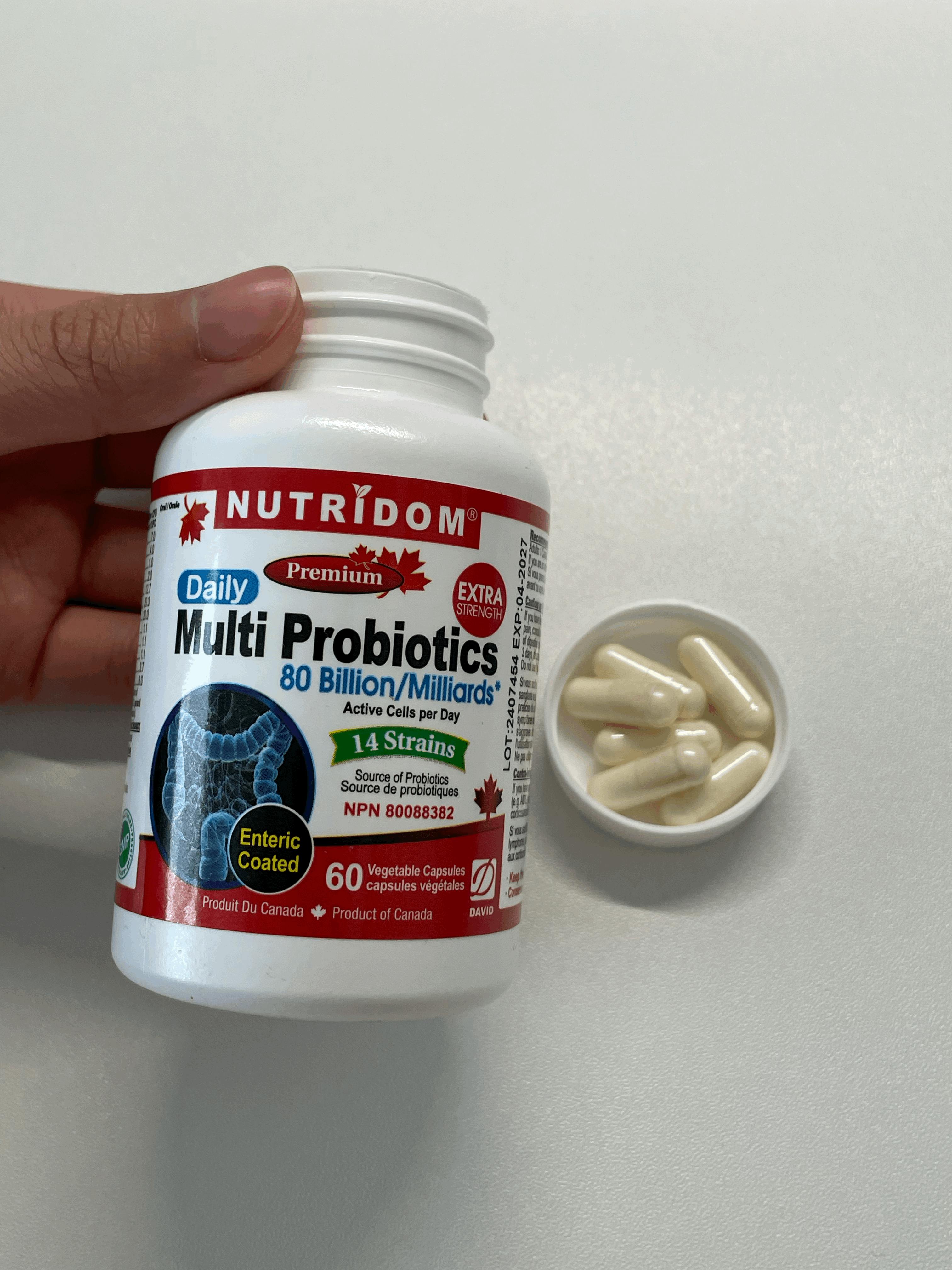
Multi Probiotics | 80 Billion CFU | 14 Strains | Gut Flora Support | 60 Vegan Capsules
Each serving (2 capsules) delivers a minimum of 80 Billion CFU of live probiotic bacteria across 14 strains, guaranteed at the expiry date not just at the time of manufacture. At the time of manufacture, a minimum of 132 Billion CFU are present per serving, providing a substantial overage to ensure the 80 Billion CFU guarantee is maintained throughout the full shelf life of the product. The formula includes strains from both the Lactobacillus and Bifidobacterium genera, covering the two primary probiotic genera relevant to human gut flora. Fructooligosaccharide (FOS) is included as a prebiotic to support the survival and activity of the probiotic strains. Helps support a healthy gut flora. Helps reduce the frequency of colds. Helps relieve gastrointestinal symptoms associated with antibiotic use. Promotes a favourable gut flora. Health Canada approved (NPN 80088382). 100% vegan, non-GMO, gluten-free, and soy-free. Made in Canada in a quality-controlled facility. 60 vegan capsules (30-day supply at 2 capsules per day).
Key Benefits
• Helps support a healthy gut flora
• Helps reduce the frequency of colds
• Helps relieve gastrointestinal symptoms associated with antibiotic use
• Promotes a favourable gut flora
• 80 Billion CFU guaranteed at expiry date
• 132 Billion CFU minimum at time of manufacture
• 14 probiotic strains from Lactobacillus and Bifidobacterium genera
• Includes FOS (fructooligosaccharide) prebiotic
• Synbiotic formula: probiotics + prebiotic in one capsule
• Health Canada approved (NPN 80088382)
• 60 vegan capsules (30-day supply at 2 capsules per day)
• Made in Canada in a quality-controlled facility
• 100% vegan and non-GMO
• Gluten-free, dairy-free, soy-free
Why "Guaranteed at Expiry" Is the Only CFU Claim That Matters
CFU (Colony Forming Units) is the standard measure of viable probiotic bacteria in a supplement. However, not all CFU claims are equal, and understanding the difference is essential when comparing probiotic products.
CFU at Manufacture vs. CFU at Expiry: Many probiotic supplements state their CFU count at the time of manufacture the moment the product is made. Probiotic bacteria are living organisms that die over time, even in encapsulated form. A product that contains 80 Billion CFU at manufacture may contain significantly fewer viable bacteria by the time it reaches the consumer and is used. Without a guarantee at expiry, the stated CFU count is not a reliable indicator of what the consumer actually receives.
This Formula Guarantees 80 Billion CFU at Expiry: This formula guarantees a minimum of 80 Billion CFU per serving at the expiry date, meaning the product is formulated and tested to ensure that at least 80 Billion viable probiotic bacteria are present per serving throughout the entire shelf life of the product. To achieve this guarantee, the formula is manufactured with a minimum of 132 Billion CFU per serving at the time of production a 65% overage above the guaranteed amount to account for the natural die off of probiotic bacteria during storage.
What This Means for the Consumer: Whether you take the first capsule from a freshly manufactured bottle or the last capsule from a bottle approaching its expiry date, you are guaranteed to receive a minimum of 80 Billion CFU per serving. This is the standard that matters.
The 14 Strains: Lactobacillus and Bifidobacterium
This formula contains 14 probiotic strains from the two primary probiotic genera relevant to human gut health: Lactobacillus and Bifidobacterium. Each strain is identified by its species name and proprietary strain designation (HA- codes), which are traceable to specific characterized strains with defined properties.
Lactobacillus Strains (8 strains):
• Lactobacillus plantarum (HA-119, R1012) — 20.3 Billion CFU the highest CFU strain in the formula. L. plantarum is one of the most versatile and resilient Lactobacillus species, naturally found in fermented foods and the human gut. It is among the most studied probiotic species for gastrointestinal support
• Lactobacillus rhamnosus (HA-111) — 20.0 Billion CFU one of the most extensively researched probiotic species globally. L. rhamnosus is particularly well-studied for gastrointestinal support and is among the most documented probiotic species for use during and after antibiotic therapy
• Lactobacillus acidophilus (HA-122) — 12.7 Billion CFU one of the most recognized probiotic species, naturally resident in the human small intestine. L. acidophilus is among the most commonly included species in multi-strain probiotic formulas
• Lactobacillus casei (HA-108, R0215) — 6.0 Billion CFU naturally found in the human intestine and oral cavity. L. casei is well-studied for gastrointestinal support
• Lactobacillus paracasei (HA-196) — 3.7 Billion CFU closely related to L. casei, naturally found in the human gut and fermented dairy products
• Lactobacillus reuteri (HA-188) — 1.1 Billion CFU one of the few probiotic species that naturally colonizes the human gut from infancy. L. reuteri produces reuterin, a broad-spectrum antimicrobial compound
• Lactobacillus fermentum (HA-179) 1.1 Billion CFU naturally found in the human gut and fermented foods. L. fermentum is studied for its antioxidant properties and gut flora support
• Lactobacillus salivarius (HA-118) — 1.1 Billion CFU naturally found in the human oral cavity and intestinal tract
Bifidobacterium Strains (4 strains):
• Bifidobacterium bifidum (HA-132) — 7.0 Billion CFU one of the most common Bifidobacterium species in the human gut. B. bifidum is particularly important in early life and remains a significant component of the adult gut microbiome
• Bifidobacterium longum subsp. longum (HA-135) — 4.0 Billion CFU one of the most abundant Bifidobacterium species in the adult human gut. B. longum is among the most studied Bifidobacterium species for gut flora support
• Bifidobacterium longum subsp. infantis (HA-116) — 2.0 Billion CFU the dominant Bifidobacterium subspecies in the infant gut, where it plays a central role in establishing the early gut microbiome
• Bifidobacterium breve (HA-129) — 1.0 Billion CFU naturally found in the human gut and breast milk. B. breve is among the dominant Bifidobacterium species in the infant gut and remains present in the adult gut microbiome
Two additional strains complete the 14 strain formula.
FOS: The Prebiotic That Feeds the Probiotics
This formula includes fructooligosaccharide (FOS) as a non-medicinal ingredient, making it a synbiotic formula a product that combines both probiotics (live beneficial bacteria) and a prebiotic (a substrate that selectively feeds beneficial bacteria) in a single product.
What Is FOS: Fructooligosaccharides are short chain carbohydrates composed of fructose units linked to a glucose molecule. They are found naturally in foods including chicory root, Jerusalem artichoke, garlic, onion, leek, asparagus, and banana. FOS are not digested by human digestive enzymes and pass intact to the large intestine, where they are selectively fermented by beneficial bacteria including Lactobacillus and Bifidobacterium species.
Why FOS Matters in a Probiotic Formula: FOS selectively stimulates the growth and activity of Lactobacillus and Bifidobacterium species the same genera present in this formula while not supporting the growth of potentially harmful bacteria such as Clostridium and Bacteroides. By including FOS alongside the probiotic strains, this formula provides the probiotic bacteria with a preferred substrate to support their survival, colonization, and activity in the gut.
Lactobacillus vs. Bifidobacterium: Understanding the Two Genera
Lactobacillus: Lactobacillus species are gram positive, rod shaped bacteria that produce lactic acid as a primary fermentation product. They are naturally found throughout the human gastrointestinal tract, with the highest concentrations in the small intestine. Lactobacillus species are also found in the oral cavity, vaginal tract, and in fermented foods including yogurt, kefir, sauerkraut, and kimchi. They are among the most studied probiotic genera and are the dominant probiotic genus in most multi-strain probiotic formulas.
Bifidobacterium: Bifidobacterium species are gram positive, branched rod shaped bacteria that produce both lactic acid and acetic acid as fermentation products. They are naturally found primarily in the large intestine (colon), where they are among the most abundant bacterial genera in healthy adults. Bifidobacterium species are particularly important in early life, where they dominate the infant gut microbiome, especially in breastfed infants. They decline in relative abundance with age, making supplementation increasingly relevant for older adults.
Why Both Genera Matter: Lactobacillus and Bifidobacterium occupy different niches in the gastrointestinal tract Lactobacillus predominantly in the small intestine and Bifidobacterium predominantly in the large intestine. A formula containing strains from both genera provides broader coverage across the full length of the gastrointestinal tract compared to a formula containing only one genus.
Understanding CFU and Strain Diversity
What Is a CFU: CFU stands for Colony Forming Unit. It is the standard measure of viable, living probiotic bacteria capable of reproducing and forming a colony. A CFU count represents the number of live bacteria in a serving, not the total number of bacterial cells (which includes both live and dead cells). Only live bacteria contribute to probiotic activity, which is why CFU is the relevant measure.
Why Strain Diversity Matters: Different probiotic strains have different properties, colonization sites, and mechanisms of action in the gut. A multi-strain formula provides broader coverage of the gastrointestinal tract and a more diverse range of probiotic activities compared to a single strain product. The 14 strains in this formula represent a broad-spectrum approach to gut flora support, covering both the small intestine (Lactobacillus) and large intestine (Bifidobacterium) with multiple characterized strains.
Strain Identification (HA- Codes): Each strain in this formula is identified by a proprietary strain designation (HA- code) in addition to its species name. Strain-level identification is important because probiotic properties are strain-specific — different strains of the same species can have different characteristics. The HA- designations identify specific, characterized strains with defined properties, providing traceability and consistency from batch to batch.
Understanding the Dosage
Serving Size: 2 capsules
CFU per Serving: Minimum 80 Billion at expiry; minimum 132 Billion at manufacture
Number of Strains: 14
Suggested Use: As directed by a healthcare practitioner
Total Capsules: 60 (30-day supply at 2 capsules per day)
Non-Medicinal Ingredients: Fructooligosaccharide (FOS), silica, hypromellose
Consult your healthcare provider to determine the appropriate dosage and timing for your individual needs. Probiotics are typically taken with or without food; some individuals prefer taking them with a meal to minimize the possibility of gastrointestinal discomfort.
Who May Consider This Product
• Individuals seeking to support a healthy gut flora with a high-CFU multi-strain probiotic
• Those wanting a CFU guarantee at expiry, not just at manufacture
• People seeking broad-spectrum gut flora support from both Lactobacillus and Bifidobacterium genera
• Those wanting gastrointestinal support during or after antibiotic use
• Individuals seeking immune support through gut flora maintenance
• Those wanting a synbiotic formula (probiotics + FOS prebiotic) in a single product
• Vegans and vegetarians
• Those seeking a Health Canada approved, Canadian-made probiotic supplement
Quality and Purity
• Health Canada approved (NPN 80088382)
• 80 Billion CFU guaranteed at expiry date per serving (2 capsules)
• 132 Billion CFU minimum at time of manufacture per serving
• 14 probiotic strains from Lactobacillus and Bifidobacterium genera
• Includes FOS prebiotic (synbiotic formula)
• Vegan capsules (hypromellose)
• 60 capsules (30-day supply)
• Made in Canada in a quality-controlled facility
• 100% vegan and non-GMO
• Gluten-free, dairy-free, soy-free
Storage
Store in a cool, dry place away from direct sunlight. Keep bottle tightly sealed. Probiotic bacteria are sensitive to heat and moisture. Refrigeration is not required for this formula but storing in a cool environment helps preserve CFU counts. Avoid storing near heat sources or in humid environments such as bathrooms.
Safety Information
Consult a healthcare professional before use if you are pregnant or breastfeeding, have a compromised immune system, or have a central venous catheter. Individuals with severely compromised immune systems (such as those undergoing chemotherapy or organ transplant recipients) should consult a healthcare provider before using probiotic supplements. May cause mild gastrointestinal discomfort (bloating, gas) during the first few days of use as the gut flora adjusts; this typically resolves with continued use. This product is not intended to diagnose, treat, cure, or prevent any disease.
Keep out of reach of children.
This product is approved by Health Canada (NPN 80088382).
About Multi Probiotics | 80 Billion CFU | 14 Strains | Guaranteed at Expiry
This multi-strain probiotic formula delivers 80 Billion CFU per serving guaranteed at the expiry date the only CFU claim that matters for the consumer. With 14 strains from both the Lactobacillus and Bifidobacterium genera, the formula provides broad-spectrum coverage across the full length of the gastrointestinal tract. FOS (fructooligosaccharide) is included as a prebiotic to selectively support the survival and activity of the probiotic strains, making this a synbiotic formula. Health Canada approved (NPN 80088382) for helping support healthy gut flora, helping reduce the frequency of colds, helping relieve gastrointestinal symptoms associated with antibiotic use, and promoting a favourable gut flora. 100% vegan and made in Canada in a quality controlled facility.
Multi Probiotics | 80 Billion CFU | 14 Strains | Gut Flora Support | 60 Vegan Capsules
Each serving (2 capsules) delivers a minimum of 80 Billion CFU of live probiotic bacteria across 14 strains, guaranteed at the expiry date not just at the time of manufacture. At the time of manufacture, a minimum of 132 Billion CFU are present per serving, providing a substantial overage to ensure the 80 Billion CFU guarantee is maintained throughout the full shelf life of the product. The formula includes strains from both the Lactobacillus and Bifidobacterium genera, covering the two primary probiotic genera relevant to human gut flora. Fructooligosaccharide (FOS) is included as a prebiotic to support the survival and activity of the probiotic strains. Helps support a healthy gut flora. Helps reduce the frequency of colds. Helps relieve gastrointestinal symptoms associated with antibiotic use. Promotes a favourable gut flora. Health Canada approved (NPN 80088382). 100% vegan, non-GMO, gluten-free, and soy-free. Made in Canada in a quality-controlled facility. 60 vegan capsules (30-day supply at 2 capsules per day).
Key Benefits
• Helps support a healthy gut flora
• Helps reduce the frequency of colds
• Helps relieve gastrointestinal symptoms associated with antibiotic use
• Promotes a favourable gut flora
• 80 Billion CFU guaranteed at expiry date
• 132 Billion CFU minimum at time of manufacture
• 14 probiotic strains from Lactobacillus and Bifidobacterium genera
• Includes FOS (fructooligosaccharide) prebiotic
• Synbiotic formula: probiotics + prebiotic in one capsule
• Health Canada approved (NPN 80088382)
• 60 vegan capsules (30-day supply at 2 capsules per day)
• Made in Canada in a quality-controlled facility
• 100% vegan and non-GMO
• Gluten-free, dairy-free, soy-free
Why "Guaranteed at Expiry" Is the Only CFU Claim That Matters
CFU (Colony Forming Units) is the standard measure of viable probiotic bacteria in a supplement. However, not all CFU claims are equal, and understanding the difference is essential when comparing probiotic products.
CFU at Manufacture vs. CFU at Expiry: Many probiotic supplements state their CFU count at the time of manufacture the moment the product is made. Probiotic bacteria are living organisms that die over time, even in encapsulated form. A product that contains 80 Billion CFU at manufacture may contain significantly fewer viable bacteria by the time it reaches the consumer and is used. Without a guarantee at expiry, the stated CFU count is not a reliable indicator of what the consumer actually receives.
This Formula Guarantees 80 Billion CFU at Expiry: This formula guarantees a minimum of 80 Billion CFU per serving at the expiry date, meaning the product is formulated and tested to ensure that at least 80 Billion viable probiotic bacteria are present per serving throughout the entire shelf life of the product. To achieve this guarantee, the formula is manufactured with a minimum of 132 Billion CFU per serving at the time of production a 65% overage above the guaranteed amount to account for the natural die off of probiotic bacteria during storage.
What This Means for the Consumer: Whether you take the first capsule from a freshly manufactured bottle or the last capsule from a bottle approaching its expiry date, you are guaranteed to receive a minimum of 80 Billion CFU per serving. This is the standard that matters.
The 14 Strains: Lactobacillus and Bifidobacterium
This formula contains 14 probiotic strains from the two primary probiotic genera relevant to human gut health: Lactobacillus and Bifidobacterium. Each strain is identified by its species name and proprietary strain designation (HA- codes), which are traceable to specific characterized strains with defined properties.
Lactobacillus Strains (8 strains):
• Lactobacillus plantarum (HA-119, R1012) — 20.3 Billion CFU the highest CFU strain in the formula. L. plantarum is one of the most versatile and resilient Lactobacillus species, naturally found in fermented foods and the human gut. It is among the most studied probiotic species for gastrointestinal support
• Lactobacillus rhamnosus (HA-111) — 20.0 Billion CFU one of the most extensively researched probiotic species globally. L. rhamnosus is particularly well-studied for gastrointestinal support and is among the most documented probiotic species for use during and after antibiotic therapy
• Lactobacillus acidophilus (HA-122) — 12.7 Billion CFU one of the most recognized probiotic species, naturally resident in the human small intestine. L. acidophilus is among the most commonly included species in multi-strain probiotic formulas
• Lactobacillus casei (HA-108, R0215) — 6.0 Billion CFU naturally found in the human intestine and oral cavity. L. casei is well-studied for gastrointestinal support
• Lactobacillus paracasei (HA-196) — 3.7 Billion CFU closely related to L. casei, naturally found in the human gut and fermented dairy products
• Lactobacillus reuteri (HA-188) — 1.1 Billion CFU one of the few probiotic species that naturally colonizes the human gut from infancy. L. reuteri produces reuterin, a broad-spectrum antimicrobial compound
• Lactobacillus fermentum (HA-179) 1.1 Billion CFU naturally found in the human gut and fermented foods. L. fermentum is studied for its antioxidant properties and gut flora support
• Lactobacillus salivarius (HA-118) — 1.1 Billion CFU naturally found in the human oral cavity and intestinal tract
Bifidobacterium Strains (4 strains):
• Bifidobacterium bifidum (HA-132) — 7.0 Billion CFU one of the most common Bifidobacterium species in the human gut. B. bifidum is particularly important in early life and remains a significant component of the adult gut microbiome
• Bifidobacterium longum subsp. longum (HA-135) — 4.0 Billion CFU one of the most abundant Bifidobacterium species in the adult human gut. B. longum is among the most studied Bifidobacterium species for gut flora support
• Bifidobacterium longum subsp. infantis (HA-116) — 2.0 Billion CFU the dominant Bifidobacterium subspecies in the infant gut, where it plays a central role in establishing the early gut microbiome
• Bifidobacterium breve (HA-129) — 1.0 Billion CFU naturally found in the human gut and breast milk. B. breve is among the dominant Bifidobacterium species in the infant gut and remains present in the adult gut microbiome
Two additional strains complete the 14 strain formula.
FOS: The Prebiotic That Feeds the Probiotics
This formula includes fructooligosaccharide (FOS) as a non-medicinal ingredient, making it a synbiotic formula a product that combines both probiotics (live beneficial bacteria) and a prebiotic (a substrate that selectively feeds beneficial bacteria) in a single product.
What Is FOS: Fructooligosaccharides are short chain carbohydrates composed of fructose units linked to a glucose molecule. They are found naturally in foods including chicory root, Jerusalem artichoke, garlic, onion, leek, asparagus, and banana. FOS are not digested by human digestive enzymes and pass intact to the large intestine, where they are selectively fermented by beneficial bacteria including Lactobacillus and Bifidobacterium species.
Why FOS Matters in a Probiotic Formula: FOS selectively stimulates the growth and activity of Lactobacillus and Bifidobacterium species the same genera present in this formula while not supporting the growth of potentially harmful bacteria such as Clostridium and Bacteroides. By including FOS alongside the probiotic strains, this formula provides the probiotic bacteria with a preferred substrate to support their survival, colonization, and activity in the gut.
Lactobacillus vs. Bifidobacterium: Understanding the Two Genera
Lactobacillus: Lactobacillus species are gram positive, rod shaped bacteria that produce lactic acid as a primary fermentation product. They are naturally found throughout the human gastrointestinal tract, with the highest concentrations in the small intestine. Lactobacillus species are also found in the oral cavity, vaginal tract, and in fermented foods including yogurt, kefir, sauerkraut, and kimchi. They are among the most studied probiotic genera and are the dominant probiotic genus in most multi-strain probiotic formulas.
Bifidobacterium: Bifidobacterium species are gram positive, branched rod shaped bacteria that produce both lactic acid and acetic acid as fermentation products. They are naturally found primarily in the large intestine (colon), where they are among the most abundant bacterial genera in healthy adults. Bifidobacterium species are particularly important in early life, where they dominate the infant gut microbiome, especially in breastfed infants. They decline in relative abundance with age, making supplementation increasingly relevant for older adults.
Why Both Genera Matter: Lactobacillus and Bifidobacterium occupy different niches in the gastrointestinal tract Lactobacillus predominantly in the small intestine and Bifidobacterium predominantly in the large intestine. A formula containing strains from both genera provides broader coverage across the full length of the gastrointestinal tract compared to a formula containing only one genus.
Understanding CFU and Strain Diversity
What Is a CFU: CFU stands for Colony Forming Unit. It is the standard measure of viable, living probiotic bacteria capable of reproducing and forming a colony. A CFU count represents the number of live bacteria in a serving, not the total number of bacterial cells (which includes both live and dead cells). Only live bacteria contribute to probiotic activity, which is why CFU is the relevant measure.
Why Strain Diversity Matters: Different probiotic strains have different properties, colonization sites, and mechanisms of action in the gut. A multi-strain formula provides broader coverage of the gastrointestinal tract and a more diverse range of probiotic activities compared to a single strain product. The 14 strains in this formula represent a broad-spectrum approach to gut flora support, covering both the small intestine (Lactobacillus) and large intestine (Bifidobacterium) with multiple characterized strains.
Strain Identification (HA- Codes): Each strain in this formula is identified by a proprietary strain designation (HA- code) in addition to its species name. Strain-level identification is important because probiotic properties are strain-specific — different strains of the same species can have different characteristics. The HA- designations identify specific, characterized strains with defined properties, providing traceability and consistency from batch to batch.
Understanding the Dosage
Serving Size: 2 capsules
CFU per Serving: Minimum 80 Billion at expiry; minimum 132 Billion at manufacture
Number of Strains: 14
Suggested Use: As directed by a healthcare practitioner
Total Capsules: 60 (30-day supply at 2 capsules per day)
Non-Medicinal Ingredients: Fructooligosaccharide (FOS), silica, hypromellose
Consult your healthcare provider to determine the appropriate dosage and timing for your individual needs. Probiotics are typically taken with or without food; some individuals prefer taking them with a meal to minimize the possibility of gastrointestinal discomfort.
Who May Consider This Product
• Individuals seeking to support a healthy gut flora with a high-CFU multi-strain probiotic
• Those wanting a CFU guarantee at expiry, not just at manufacture
• People seeking broad-spectrum gut flora support from both Lactobacillus and Bifidobacterium genera
• Those wanting gastrointestinal support during or after antibiotic use
• Individuals seeking immune support through gut flora maintenance
• Those wanting a synbiotic formula (probiotics + FOS prebiotic) in a single product
• Vegans and vegetarians
• Those seeking a Health Canada approved, Canadian-made probiotic supplement
Quality and Purity
• Health Canada approved (NPN 80088382)
• 80 Billion CFU guaranteed at expiry date per serving (2 capsules)
• 132 Billion CFU minimum at time of manufacture per serving
• 14 probiotic strains from Lactobacillus and Bifidobacterium genera
• Includes FOS prebiotic (synbiotic formula)
• Vegan capsules (hypromellose)
• 60 capsules (30-day supply)
• Made in Canada in a quality-controlled facility
• 100% vegan and non-GMO
• Gluten-free, dairy-free, soy-free
Storage
Store in a cool, dry place away from direct sunlight. Keep bottle tightly sealed. Probiotic bacteria are sensitive to heat and moisture. Refrigeration is not required for this formula but storing in a cool environment helps preserve CFU counts. Avoid storing near heat sources or in humid environments such as bathrooms.
Safety Information
Consult a healthcare professional before use if you are pregnant or breastfeeding, have a compromised immune system, or have a central venous catheter. Individuals with severely compromised immune systems (such as those undergoing chemotherapy or organ transplant recipients) should consult a healthcare provider before using probiotic supplements. May cause mild gastrointestinal discomfort (bloating, gas) during the first few days of use as the gut flora adjusts; this typically resolves with continued use. This product is not intended to diagnose, treat, cure, or prevent any disease.
Keep out of reach of children.
This product is approved by Health Canada (NPN 80088382).
About Multi Probiotics | 80 Billion CFU | 14 Strains | Guaranteed at Expiry
This multi-strain probiotic formula delivers 80 Billion CFU per serving guaranteed at the expiry date the only CFU claim that matters for the consumer. With 14 strains from both the Lactobacillus and Bifidobacterium genera, the formula provides broad-spectrum coverage across the full length of the gastrointestinal tract. FOS (fructooligosaccharide) is included as a prebiotic to selectively support the survival and activity of the probiotic strains, making this a synbiotic formula. Health Canada approved (NPN 80088382) for helping support healthy gut flora, helping reduce the frequency of colds, helping relieve gastrointestinal symptoms associated with antibiotic use, and promoting a favourable gut flora. 100% vegan and made in Canada in a quality controlled facility.

Canadian-Made

Lab-Tested

Health Canada Approved